
What to Expect Before and After a Dog Teeth Cleaning
If your dog has never had a professional dental cleaning, or their last one was years ago, you may be wondering what to expect with a dog teeth cleaning before and after the procedure. Most dogs come out of a dog teeth cleaning feeling better than they have in a long time. Oral pain is something dogs mask instinctively, so pet owners are often surprised by how much brighter and livelier their dog seems once their mouth is finally healthy. At Furever Family Veterinary Care Center in East Moline, IL, we walk every pet owner through what to expect so you can feel confident from the moment you drop your dog off to the day they’re back to their happy, tail-wagging self.
Do Dogs Feel Better After Teeth Cleaning?
Yes, the vast majority of dogs feel noticeably better after a professional dog teeth cleaning. Because dogs don’t show pain the way people do, many pet owners don’t realize their dog has been uncomfortable until they see the difference a clean, healthy mouth makes.
After a dog teeth cleaning, owners frequently report that their dog is more energetic, more interested in food and play, and generally happier. Dogs that had been reluctant to chew hard toys often return to those behaviors once the source of their discomfort is gone. The relief is real, even if your dog couldn’t tell you they were hurting before.
What Changes Are Normal After a Dog Teeth Cleaning?
In the 24 to 48 hours following a dog teeth cleaning, it is normal to notice some grogginess from the anesthesia, reduced appetite, and mild gum sensitivity. These effects are temporary. Within a day or two, most dogs are fully back to normal. If extractions were performed, recovery may take slightly longer, and your veterinarian will provide specific guidance for care at home.
Is It Worth It to Have Your Dog’s Teeth Cleaned?
Professional dog teeth cleaning is absolutely worth it. The procedure doesn’t just improve your dog’s breath and brighten their smile. It actively prevents disease. Untreated periodontal disease allows bacteria to enter the bloodstream, where it can cause damage to the heart, kidneys, and liver over time. These are serious, life-shortening conditions that a routine dog teeth cleaning can help prevent.
When you look at the dog teeth cleaning before and after picture in terms of overall health, not just appearance, the value becomes very clear. A dog with a clean, healthy mouth is less likely to experience tooth pain, tooth loss, or systemic illness. The upfront investment in professional dental care is far less than the cost of treating advanced periodontal disease or the organ damage it can cause.
What Does a Dog’s Mouth Look Like Before a Dental Cleaning?
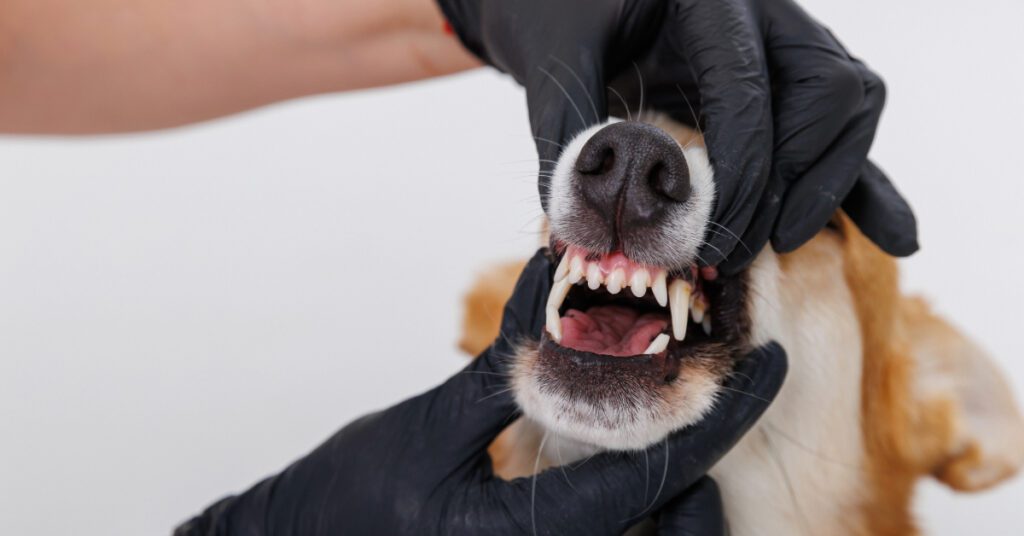
Before a professional dog teeth cleaning, it is common to see yellow or brown tartar accumulation along the gumline, especially on the upper back teeth. Gums may appear red or slightly swollen. In more advanced cases, you might notice gum recession, visible tartar bridges between teeth, or a noticeable odor. Dogs with significant disease may also have loose teeth or pockets of infection that are visible on dental X-rays but not to the naked eye.
What Does a Dog’s Mouth Look Like After a Dental Cleaning?
After a professional dog teeth cleaning, the teeth should appear white or off-white, with smooth, polished surfaces. The gums may be slightly pink and sensitive in the short term, but they should look cleaner and less inflamed. Pets whose breath previously caused you to keep your distance will usually have noticeably fresher breath within days of their cleaning. It’s a dramatic difference, and most owners say they wish they had scheduled it sooner.
How Painful Is Teeth Cleaning for Dogs?
The dog teeth cleaning procedure itself is not painful. Your dog is under general anesthesia for the entire procedure, so they feel nothing while the cleaning takes place. What some dogs experience is mild soreness in the gums during the hours after the anesthesia wears off, particularly if the gums were inflamed or if any extractions were performed.
Veterinarians routinely provide pain medication to manage post-procedure discomfort. The soreness typically resolves within 24 to 48 hours for routine cleanings, and within a few days if extractions were involved. Our team at Furever Family Veterinary Care Center will always send you home with clear instructions and, when appropriate, pain management medication to support your dog’s recovery.
Here is a brief breakdown of what to expect:
- During the procedure: No pain. Your dog is fully anesthetized and monitored throughout.
- Immediately after: Mild grogginess, possible gum sensitivity as anesthesia wears off.
- Days one and two: Most dogs recover quickly. Soft food may be recommended temporarily.
- After extractions: Soreness may last a few additional days. Pain medication is typically prescribed.
How Long Is a Typical Dog Teeth Cleaning?
A routine professional dog teeth cleaning takes approximately 45 minutes to two hours from start to finish, including anesthesia induction, dental X-rays, scaling, polishing, and the oral exam. When you factor in the pre-procedure preparation and recovery from anesthesia, most dogs are at the clinic for a full morning or half day.
More complex cases, such as dogs with significant tartar buildup, multiple teeth requiring extraction, or advanced periodontal disease, may take longer. Your veterinarian will give you a time estimate based on your dog’s specific needs. At Furever Family Veterinary Care Center in East Moline, IL, we communicate with you throughout the day so you always know how your pet is doing.
What Should I Do to Prepare My Dog Before a Dental Cleaning?
Before your dog’s dental appointment, your veterinarian will provide specific instructions, but here are the standard preparations to expect:
- Withhold food and water: Most clinics require dogs to fast from food the night before and water the morning of the procedure. This is a safety requirement for anesthesia.
- Complete pre-anesthetic bloodwork: This is often done at a wellness visit before the dental appointment, or it may be performed the morning of the cleaning.
- Share your dog’s health history: Let your veterinarian know about any current medications, supplements, or health conditions.
- Plan for pickup: Your dog will be drowsy after the procedure. Plan to be available for pickup in the afternoon and to keep your dog calm and quiet at home that evening.
What a Healthy Mouth Can Do for Your Dog’s Quality of Life
The dog teeth cleaning before and after difference isn’t just cosmetic. It’s a health transformation. A dog who arrives at Furever Family Veterinary Care Center with a painful, infected mouth leaves with clean teeth, fresh breath, and a mouth that no longer hurts. That matters in a real, everyday way in how your dog eats, plays, sleeps, and interacts with your family. If it’s been a while since your dog had a professional dental cleaning, there’s no better time than now to schedule an appointment and give your dog the relief they deserve. Call us at (309) 281-7026 or book an appointment online today.
Recent Posts
About Furever Family Veterinary Care Center
As an AAHA Accredited Veterinary Care Center, we care about your animals from nose-to-tail throughout their lifetime and have built our practice to support as much of your pet's needs here on site.
We have a deep love for every furry friend and know that they are part of your Family – and deserve to be treated that way.